Milonga etiquette: the unwritten rules of the dance floor
A milonga is a social dance, and it runs on shared habits that everyone follows. Knowing them makes you a welcome guest anywhere, from a neighborhood milonga to a festival.
Tandas and cortinas
The music is played in tandas of three or four songs by the same orchestra and in the same style. Between tandas a short, different piece called the cortina plays. It is the signal to thank your partner, leave the floor and look for the next one. Dancing the whole tanda with the same partner is the norm.
The cabeceo
Traditionally, invitations to dance are made from a distance with eye contact and a slight nod, called the cabeceo. It lets anyone decline without awkwardness. Many places are relaxed about it and a polite spoken invitation works too, but never insist after a no.
The line of dance
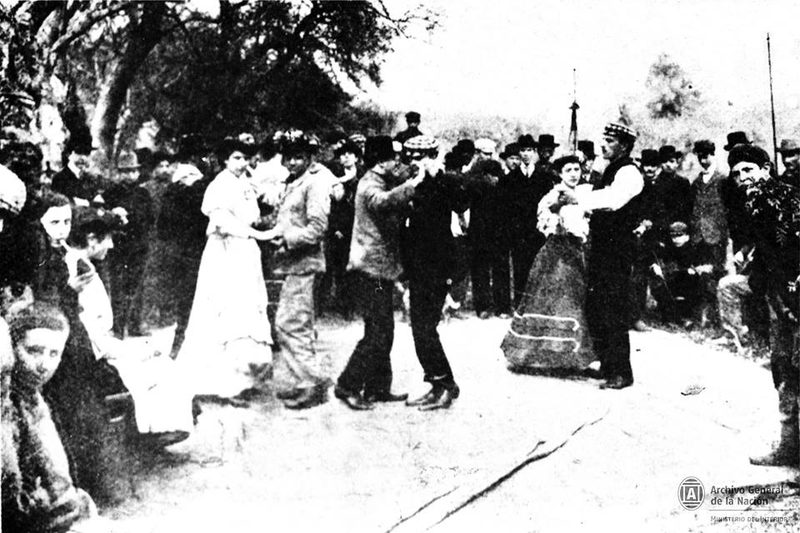
Couples move counter-clockwise around the room, following the pair ahead in a flowing lane. Do not cut across the floor, do not stop in the middle, and keep your steps in proportion to the space. Avoiding collisions is the main rule of the floor.
Floor manners
Do not teach or correct your partner on the dance floor. Wait for a class or a práctica for that. Keep the embrace comfortable, mind your hygiene, and thank your partner at the end of the tanda, whether or not it went well.

Dress and shoes
Dress a little smarter than for a class. Shoes with a smooth sole are best, and a spare shirt is welcome in summer. Keep bags and phones off the dance floor.
Ready to dance? See the milongas on today: Milongas today · All upcoming events